Most EMF studies ask about phones. This one asked a question that hits closer to home for me: what about the radiofrequency levels inside the house where a newborn spends almost all of their time?
A 2025 prospective study did something I haven’t seen often — researchers went into homes, measured the actual RF-EMF levels with a professional meter, and then followed the babies through their first year of development.
Study at a glance
- Title
- Radiofrequency Electromagnetic Field Emissions and Neurodevelopmental Outcomes in Infants: A Prospective Cohort Study
- Author
- Bageshree Seth
- Journal
- Cureus, 2025
- Who
- 105 newborns, 261 developmental check-ins over their first year
- Exposure
- Household RF-EMF measured with a Narda SRM-3006 selective radiation meter
- Outcome
- Ages and Stages Questionnaire-3 (ASQ-3): gross motor, fine motor, problem-solving, personal-social
How exposure was measured
Homes were split into three equal groups based on measured RF levels. The spread between them was large:
Measured household RF-EMF levels
Median power density in each exposure group (mW/m²)
View as table
| Measure | Value |
|---|---|
| Low-exposure homes | 0.62 mW/m² |
| Middle-exposure homes | 8.66 mW/m² |
| High-exposure homes | 32.36 mW/m² |
What the researchers found
Babies in the highest-RF homes were more likely to score in the concern range in two of the four domains, even after the researchers adjusted for low birth weight:
Odds of a developmental concern: high-RF vs. low-RF homes
Adjusted odds ratios. The dashed line marks 1.0 — no difference between groups.
Confidence intervals are wide (fine motor 1.10–6.78; problem-solving 1.41–9.55), which is expected in a study of this size.
View as table
| Measure | Value |
|---|---|
| Problem-solving | 3.67× |
| Fine motor | 2.74× |
Low birth weight was also independently linked with poorer fine-motor (aOR 4.19) and problem-solving (aOR 2.57) scores — a good reminder that many factors shape early development, and RF is being studied as one among them.
What this means for moms
The detail I keep coming back to is the 52-fold difference in RF levels between homes. That tells me our home environments are not all the same — and that the choices we make about routers, devices and where they sit actually change the numbers.
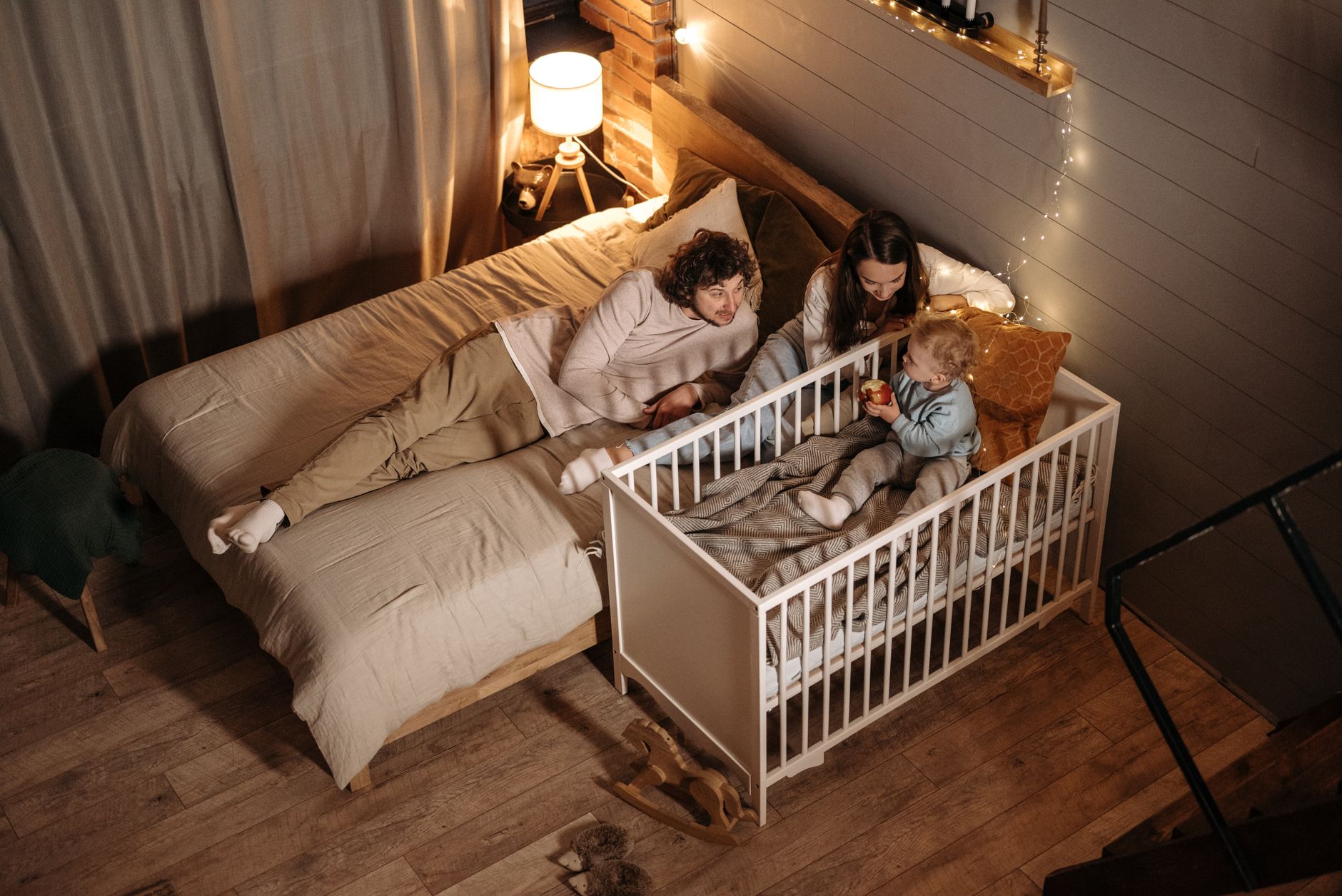
The baby’s room is the one place we have nearly complete control over. It’s where I’d start.
The honest part: This is a single-author study of 105 babies. It’s observational, so it shows an association rather than proof of cause, and the ASQ-3 is a screening questionnaire filled out with parents rather than a clinical diagnosis. It needs to be repeated in larger groups. What makes it valuable is the design: real measured exposure, followed forward over time.
Lower the RF in your baby’s space
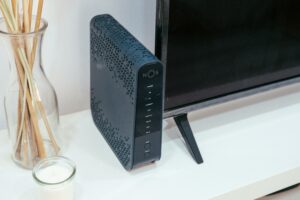
- Move the routerKeep it out of the nursery and off the shared wall with the crib.
- Wired monitorChoose a wired or low-EMF baby monitor and keep it several feet from the crib.
- Nighttime offPut the router on a timer or turn Wi-Fi off overnight.
- Phones outCharge phones and tablets outside the nursery.
Want one simple step for your home? Aires is the EMF protection I use in my own home and for my own kids — and Moms Against EMF readers get 25% off every order.
Sources
- Seth B. Radiofrequency Electromagnetic Field Emissions and Neurodevelopmental Outcomes in Infants: A Prospective Cohort Study. Cureus. 2025. cureus.com
This article is an accessible summary of published research for a general audience. It is educational content only and is not medical advice. Please talk with your own healthcare provider about your family’s specific situation.