
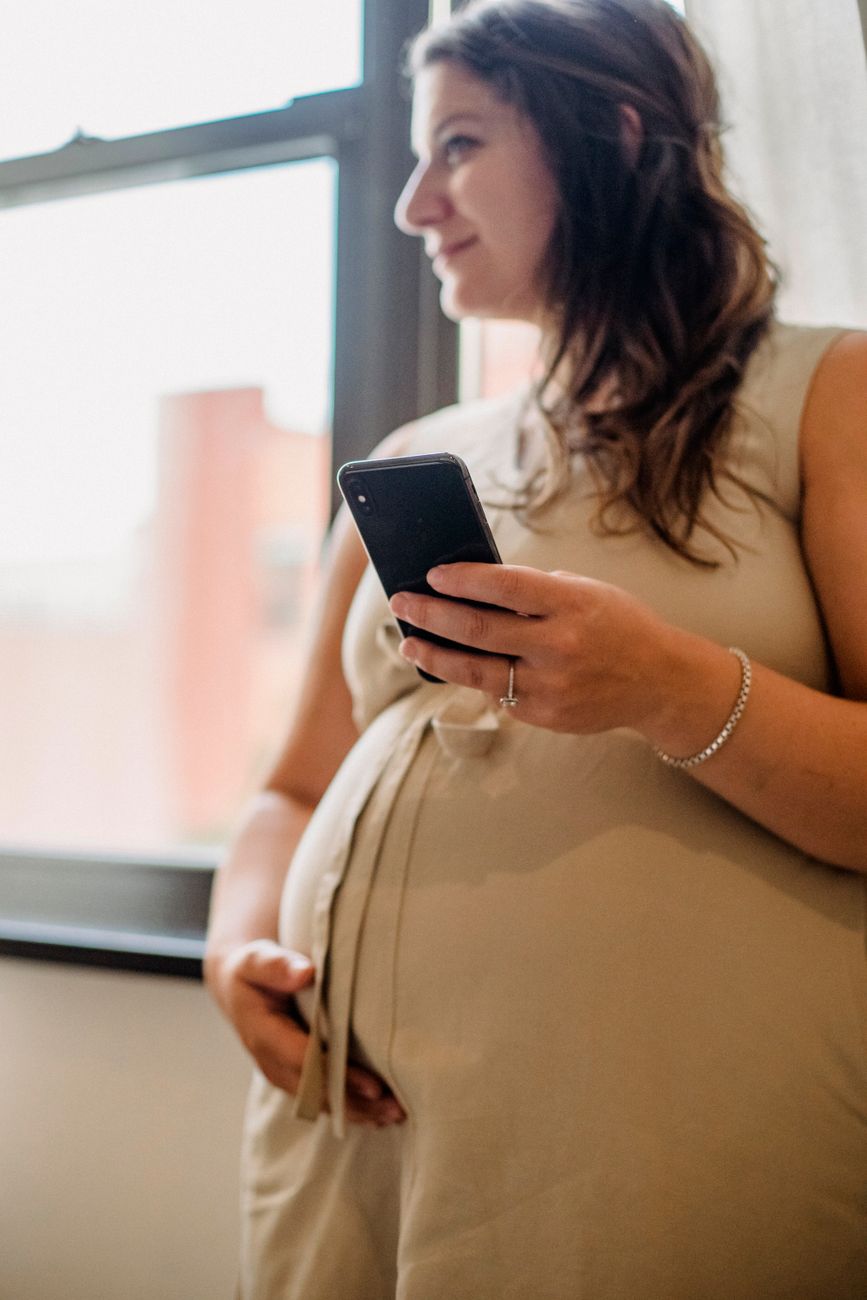
When I was pregnant, I read every label. I knew which cheeses to skip, which sunscreen ingredients to avoid, and exactly how much coffee was “probably fine.” What nobody handed me was any guidance on the phone that lived in my pocket, right against my belly, for most of the day.
It turns out a group of doctors and scientists tried to change that more than a decade ago. In 2014 they put their names on a short, plain-language statement for pregnant women — and it’s still one of the clearest pieces of guidance I’ve found.
Study at a glance
- Name
- Joint Statement on Pregnancy and Wireless Radiation (The BabySafe Project)
- Issued
- June 3, 2014
- Organized by
- Grassroots Environmental Education and Environmental Health Trust (both non-profits)
- Signed by
- 44 physicians and scientists from 13 nations, plus 13 educators who study wireless radiation
- Ask
- Pregnant women should limit exposure to wireless radiation and keep devices away from the abdomen
What the statement says
The message is short and practical. The signers acknowledged that the science on prenatal exposure is still developing — and argued that, because a developing baby is uniquely vulnerable, the reasonable response is to reduce exposure now rather than wait for every question to be settled.
Their recommendations to pregnant women were simple:
- Limit your exposure to cell phone and other wireless radiation during pregnancy.
- Keep cell phones away from your body, and especially away from your abdomen.
- Use speakerphone or a hands-free kit instead of holding the phone to your head.
- Keep laptops, tablets and other wireless devices off your belly and lap.
The research behind it
The statement pointed to a body of work that had been growing for years. It noted that more than fifty studies had reported adverse effects from prenatal exposure to wireless radiation, in humans and in six other species.
The study the signers highlighted most came from Yale. Researchers exposed pregnant mice to cell phone radiation and then followed their offspring. The exposed offspring showed poorer memory and more hyperactivity, and the researchers reported a dose-response relationship: the more exposure in the womb, the more the offspring’s brain activity changed.
Why dose-response matters: In research, a dose-response pattern — more exposure, more effect — is one of the things scientists look for when they’re deciding whether a link might be real rather than a coincidence. It doesn’t prove cause on its own, but it’s a meaningful signal.
What this means for you as a mom
I love this statement because it doesn’t ask you to panic, and it doesn’t ask you to give up your phone. It asks for distance and awareness during the nine months when your baby’s brain and body are being built from scratch.
And notice what it doesn’t rely on: it doesn’t claim we have the final answer. It applies the same precautionary thinking we already use for so much else in pregnancy. We don’t wait for absolute proof before skipping a second glass of wine — we make the low-cost choice that protects the baby.
The honest part: This is an expert position statement, not a new study. The Yale research it highlights was done in mice, and the signers themselves framed their guidance as precautionary. Since 2014, more human research has appeared — including studies on phone SAR and birth size and home RF levels and infant development — which you can read next in this series.
Simple steps you can start today
- Phone off the bumpCarry it in a bag, not a pocket or waistband.
- Speaker or wired earbudsKeep the phone away from your head and body during calls.
- Laptop on the tableNot on your lap or resting on your belly.
- Bedroom resetPhone across the room or in airplane mode overnight; router out of the bedroom.
Want one simple step for your home? Aires is the EMF protection I use in my own home and for my own kids — and Moms Against EMF readers get 25% off every order.
Sources
- Grassroots Environmental Education & Environmental Health Trust. Joint Statement on Pregnancy and Wireless Radiation (The BabySafe Project), June 3, 2014. Summary via SaferEMR (Joel Moskowitz, PhD, UC Berkeley): saferemr.com
- Aldad TS, Gan G, Gao XB, Taylor HS. Fetal radiofrequency radiation exposure from 800–1900 MHz-rated cellular telephones affects neurodevelopment and behavior in mice. Scientific Reports, 2012.
This article is an accessible summary of published research for a general audience. It is educational content only and is not medical advice. Please talk with your own healthcare provider about your family’s specific situation.